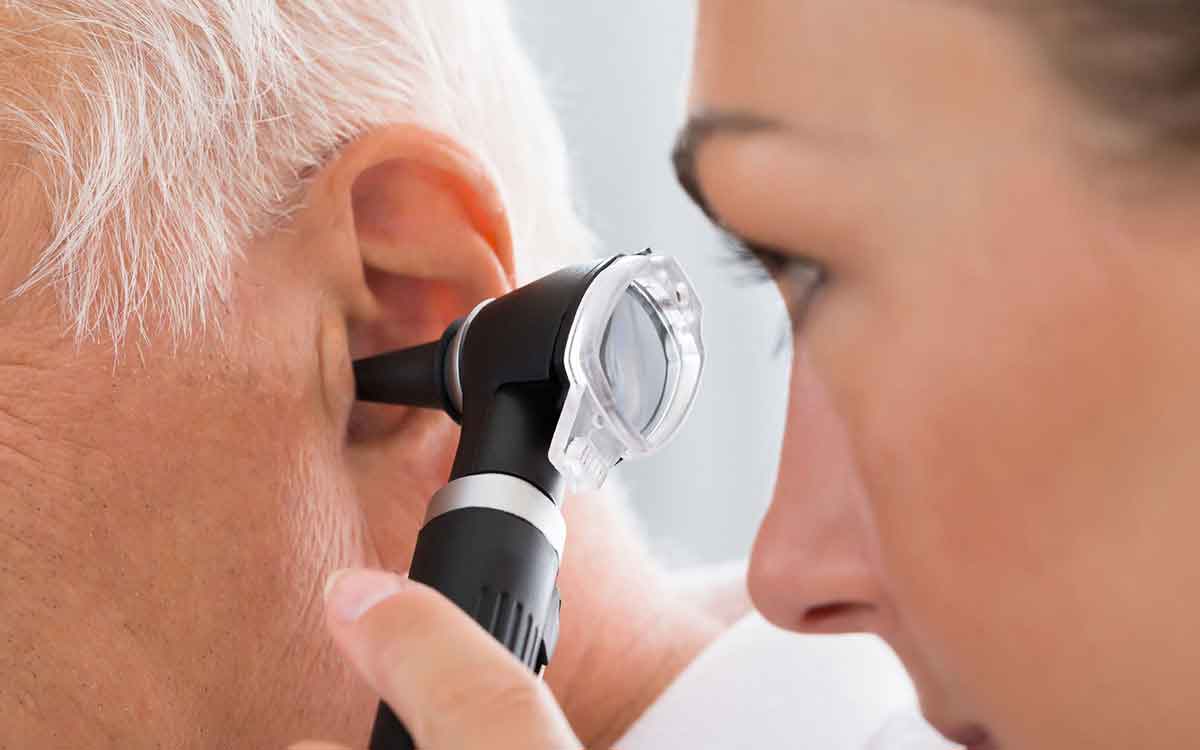
Because hearing loss typically progresses slowly, early signs frequently go unnoticed by the individual. Subconscious adjustments, such as elevating the phone volume or requesting verbal repeats, often mask the early progression of hearing loss.
Seeking an early evaluation facilitates efforts to maintain auditory function, improve communication, and protect overall quality of life.
Common Symptoms of Early Hearing Loss
Should you encounter any of these indicators, consider scheduling a professional hearing assessment to establish a baseline.
- Difficulty understanding conversations, especially in noisy environments with a lot of activity.
- Frequently requesting others to clarify their statements.
- The perception of muffled or slurred speech where sounds lack definition.
- Requiring increased decibel settings for media beyond the comfort of family members.
- Trouble hearing higher-pitched sounds, such as children’s voices, birds, or electronic alerts.
- Auditory sensations such as ringing, buzzing, or humming, clinically termed tinnitus.
- Feeling cognitively fatigued after social interactions, resulting from increased efforts to hear better.
- Isolating from group interactions as conversational tracking feels taxing.
These early signs of hearing loss can affect either ear and can be intermittent at first. As a result of rapid neural adaptation, many individuals remain unaware of their compensatory habits until the deficit is significant.
Auditory Health: Current Statistics and Projections
Data from the World Health Organization indicates that a vast population will face the requirement for auditory rehabilitation by mid-century. Other relevant statistics involve:
- By 2050, nearly 2.5 billion people are expected to experience various levels of hearing loss.
- More than five percent of the global community (roughly 430 million people) requires clinical support to manage disabling hearing loss.
- In excess of 1 billion young adults face the threat of irreversible hearing loss due to unsafe listening practices.
- Among those aged 60 and older, over 25% suffer from disabling hearing loss.
The Value of Early Hearing Loss Detection
Neglecting auditory decline can affect general health and physiological status.
Clinical research has linked hearing loss with higher incidences of social isolation, depression, cognitive decline, and balance issues.
Timely management provides superior results and diverse therapeutic options.
A hearing evaluation helps identify if shifts stem from age-related hearing loss, acoustic trauma, earwax buildup, infection, or underlying pathology.
Certain hearing variations are transient and resolve with appropriate medical care.
In addition, employing protective measures or digital hearing aids early may delay the advancement of hearing loss.
Indications for a Professional Hearing Evaluation
You should consider arranging a hearing assessment if:
- Auditory symptoms remain present for a duration exceeding several weeks.
- Auditory trouble begins to impact work or daily activities.
- Experiences with acute hearing loss, dizziness, or chronic tinnitus require prompt evaluation.
Audiological evaluations are noninvasive procedures, yielding deep insights into your physiological hearing status.
We invite you to reach out to our clinic if you feel a hearing screening is necessary.
Common Questions About Early-Stage Hearing Loss
Question: Does hearing loss only occur with aging?
Answer: No. While common in seniors, hearing impairment can be caused by medications, loud noise, infections, or hereditary conditions.
Question: Are there cases where hearing loss is reversible?
A: Some causes, like earwax buildup or infection, may be reversible. However, permanent types of hearing loss are often successfully managed with hearing aid technology or therapeutic strategies.
Q: At what intervals should I have my hearing evaluated?
A: Adults should have a baseline hearing test by age 50, or earlier if symptoms or risk factors are present.