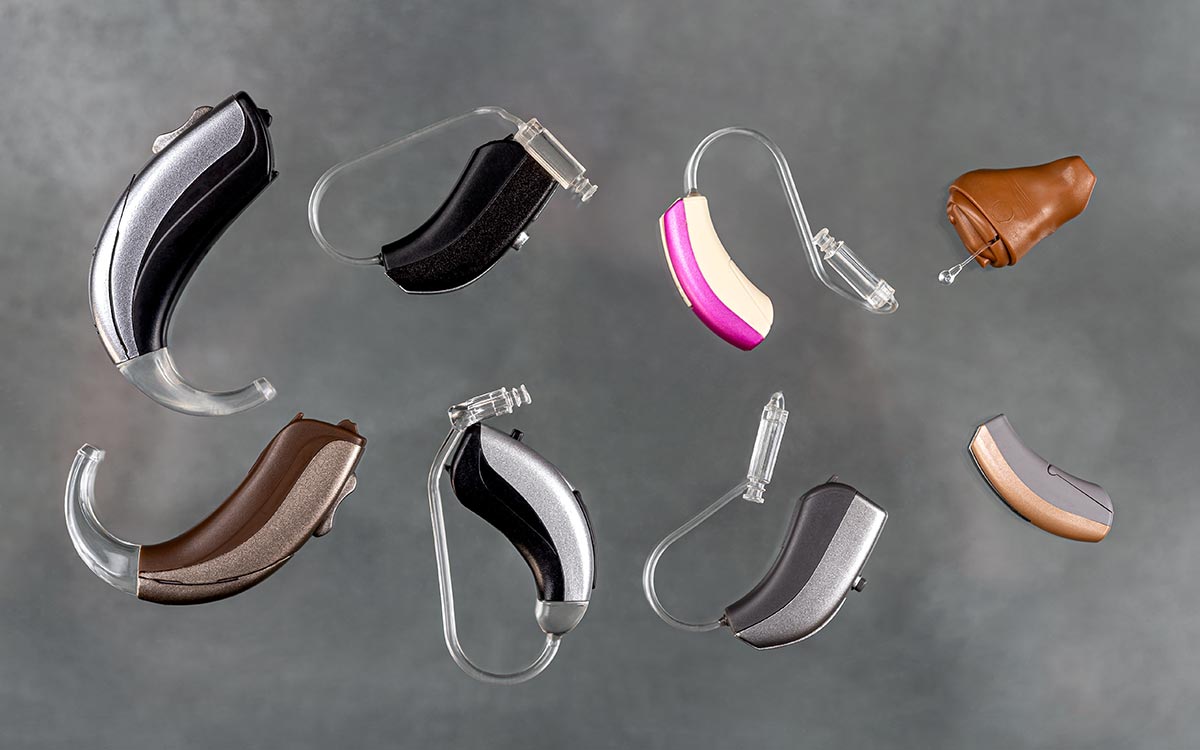
With so many choices in terms of size, style, and technology, the process of picking an instrument can feel quite intense. Rest assured that there is a hearing device tailored to every lifestyle and degree of impairment. It’s all about learning which model aligns perfectly with your specific requirements.
Feeling certain about your selection begins with knowing how different hearing aids function and compare. Today, we’re summarizing the different hearing aid styles and what makes each one unique.
The ITC (In-the-Canal) Style Detailed
What they are:
ITC hearing aids sit partially in the ear canal, with a small portion visible at the outer ear.
The Perks:
- More subtle than larger models
- Custom-molded for ease
- Suitable for mild to medium hearing loss
Because they offer both discretion and helpful features, ITC models are an excellent pick for those new to hearing technology.
Invisible-in-Canal (IIC) Hearing Aids
How they function:
As the most discreet custom option, IIC aids represent the smallest available style. This style rests deep in the ear for a completely covert appearance.
User Benefits:
- Offers the most subtle design of any hearing aid style
- Natural sound quality due to microphone placement
- Featherweight and comfortable
IIC devices are primarily aimed at those with moderate hearing needs who want their technology to remain completely unnoticed.
Full and Partial ITE Options
What they represent:
ITE devices are constructed to reside in the outer ear area, offering two different shell sizes based on your anatomy. Every unit is specifically customized to match your ear’s unique shape.
Why users prefer this style:
- A slightly larger casing accommodates advanced tech and more powerful batteries
- Provides a more manageable process for those who struggle with tiny accessories
- Effective for an extensive spectrum of hearing impairments, ranging from mild to severe
ITE models are often selected by individuals who want a simple, all-in-one design without behind-the-ear components.
Traditional Behind-the-Ear (BTE) Units
Operation:
These devices sit on the external portion of the ear’s anatomy. Audio is sent through a thin tube or a personalized mold in the canal.
Key Strengths:
- Known for being exceptionally adaptable and robust
- Provides an extensive selection of amplification suitable for nearly any user
- The spacious housing enables high-tech extras and built-in power cells
For those who value a reliable device that is easy to manage and provides plenty of volume, BTE is a top choice.
RIC (Receiver-in-Canal) Overview
What they represent:
While they resemble BTE units, RIC aids set the speaker directly in the canal for improved sound delivery.
Why users select them:
- Very natural sound quality
- Offers an incredibly low-profile look that is comfortable for almost everyone
- RIC technology is highly versatile for various different audiogram profiles.
The combination of design and high-end performance makes RIC models an ideal choice in the modern market.
Understanding Long-Term Solutions
What they represent:
These devices are placed far in the ear canal by a hearing professional and can stay in place for several weeks at a time.
User Motivations:
- Perfect for users who want to bypass the routine of handling hearing aids daily
- Almost invisible
- You can move about your whole life—including sports and rest—while wearing them
If you prefer a hearing solution that requires zero daily thought, the extended-wear style is perfect.
Connected Wireless Solutions
Digital Features:
Bluetooth-ready hearing aids allow for a wireless digital bridge between your hearing technology and your smart devices.
Why users choose them:
- Turn your hearing aids into cordless headphones for all your favorite audio
- Adjust settings via an app
- Improved convenience for modern lifestyles
You can locate Bluetooth capabilities built into an array of form factors, from RIC and BTE to custom ITC designs.
Surgically Placed Middle-Ear Solutions
What they represent:
Middle-ear implants are specialized instruments that employ mechanical vibration to enhance hearing via the middle ear.
Why implants are used:
- Serves as a critical substitute for those who find no success with traditional amplification
- Solves the problem of canal discomfort caused by regular hearing aids
Middle-ear implants are usually recommended only after a full evaluation by an ENT specialist.
Selecting Your Ideal Auditory Solution
Every hearing aid style offers its own advantages, and the right option depends on your level of hearing loss, comfort preferences, lifestyle, and cosmetic considerations. By consulting a specialist, you can explore various models and see which one feels most natural to you.
Begin your path to better sound by setting up an auditory test now. Your future of assured interaction starts with this first evaluation.
Sources:
https://www.mayoclinic.org/diseases-conditions/hearing-loss/in-depth/hearing-aids/art-
20044116
https://www.hearinglife.com/hearing-aids/types
https://www.nidcd.nih.gov/health/hearing-aids